How to review mock exam results and learn from mistakes
Use flags during an attempt, inspect worked solutions after submission, and turn the result into a specific next study step.
AI-assisted writing. Feature steps checked against StudySoda’s current editor, study screens, and API contracts. Our editorial approach
Use a result to identify the next thing to practice. A wrong answer, an uncertain correct answer, and an unanswered question need different follow-up.
Use flags to record uncertainty during the attempt
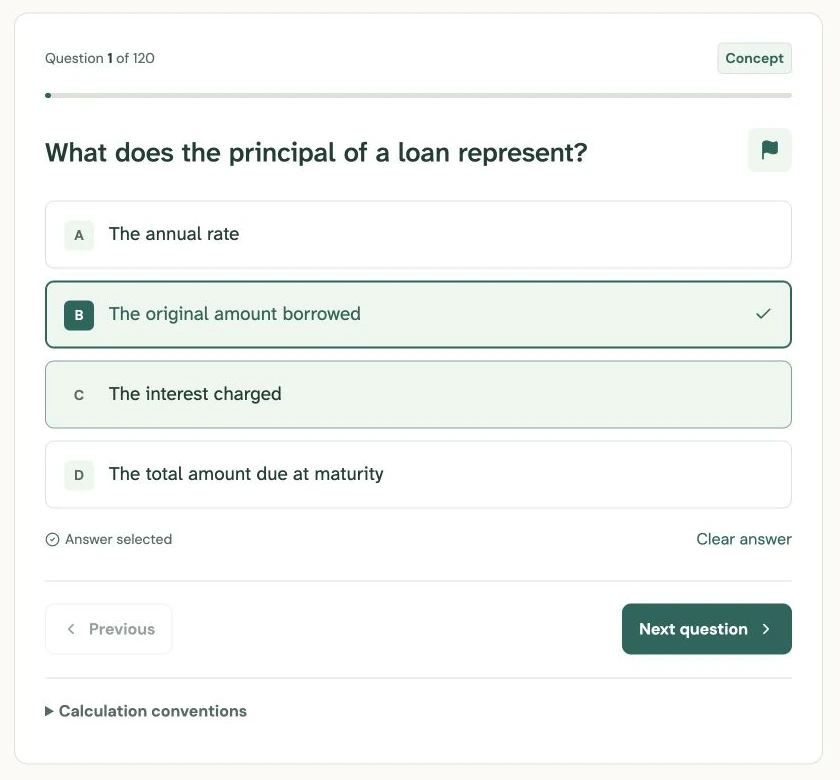
Open a public exam to start or resume an attempt. Guests can use a temporary browser-linked attempt; signed-in learners use their separate account history. Work from the stated conventions, especially for calculation questions. Select the answer you think is correct, then flag the question if you want to revisit it before submitting.
Flagging does not select an answer or change the score. It is a marker for your own review. You might flag a question because you guessed between two options, used an unfamiliar rule, or need more time to check the arithmetic.
Answers, flags, and your current position save as you work. Watch for save errors and retry before leaving. You can resume an active attempt, but a timer showing elapsed time is not a timed-test limit: time away from the page is included. Use a separate study plan if you want to practice within a chosen time budget.
Use the question map to check unfinished work
The question map can show all questions, unanswered questions, or flagged questions. Review the unanswered group first if you accidentally skipped an item. Then revisit flags and decide whether your selected answers still make sense.
Before Submit exam completes, StudySoda shows a confirmation with the unanswered and flagged counts. An unanswered question is scored as wrong. Flags themselves carry no penalty. Submission saves the latest answers and asks the server to grade the attempt.
Submit when you are ready to see feedback. In the normal learner flow, correct answers and explanations remain hidden during an active attempt. After submission, the attempt is a completed record rather than an editable answer sheet; a retry is a separate practice attempt.
Read the reasoning behind each result
Start with Missed to find incorrect and unanswered questions. Compare your choice with the correct one, then read the full explanation. If the exam mixes question types, the concept and calculation breakdown can show where to investigate, but a small number of questions is not a complete measure of your ability.
Classify the cause of each miss in your own notes: missing concept, wrong formula, unit conversion, arithmetic, misunderstood wording, or no answer. For a simple-interest question, a 360-versus-365 error calls for reviewing the convention; a misplaced decimal calls for a different check.
Next, inspect Flagged. A correct guess deserves attention even though it increased the score. Use All questions when you want to review the complete attempt or verify an explanation you found unclear. An author’s worked solution is useful feedback, but check the cited source if something appears inconsistent.
Turn the result into a short follow-up plan
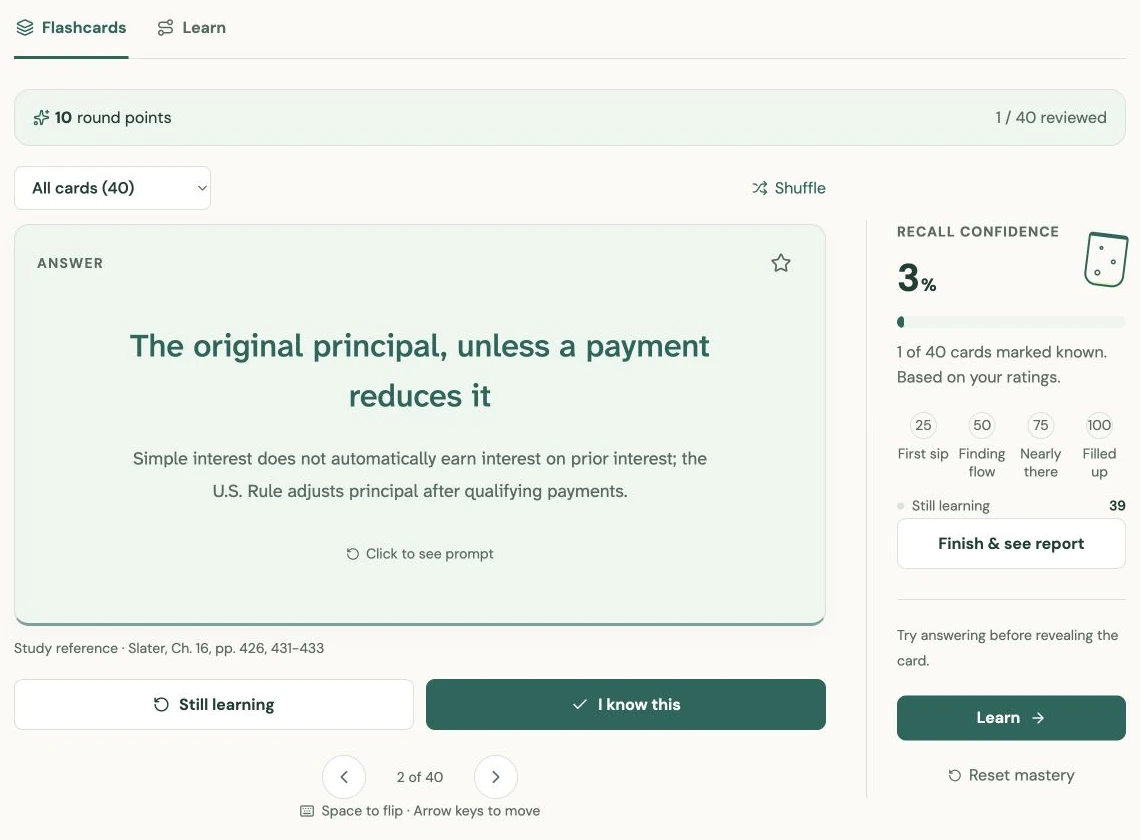
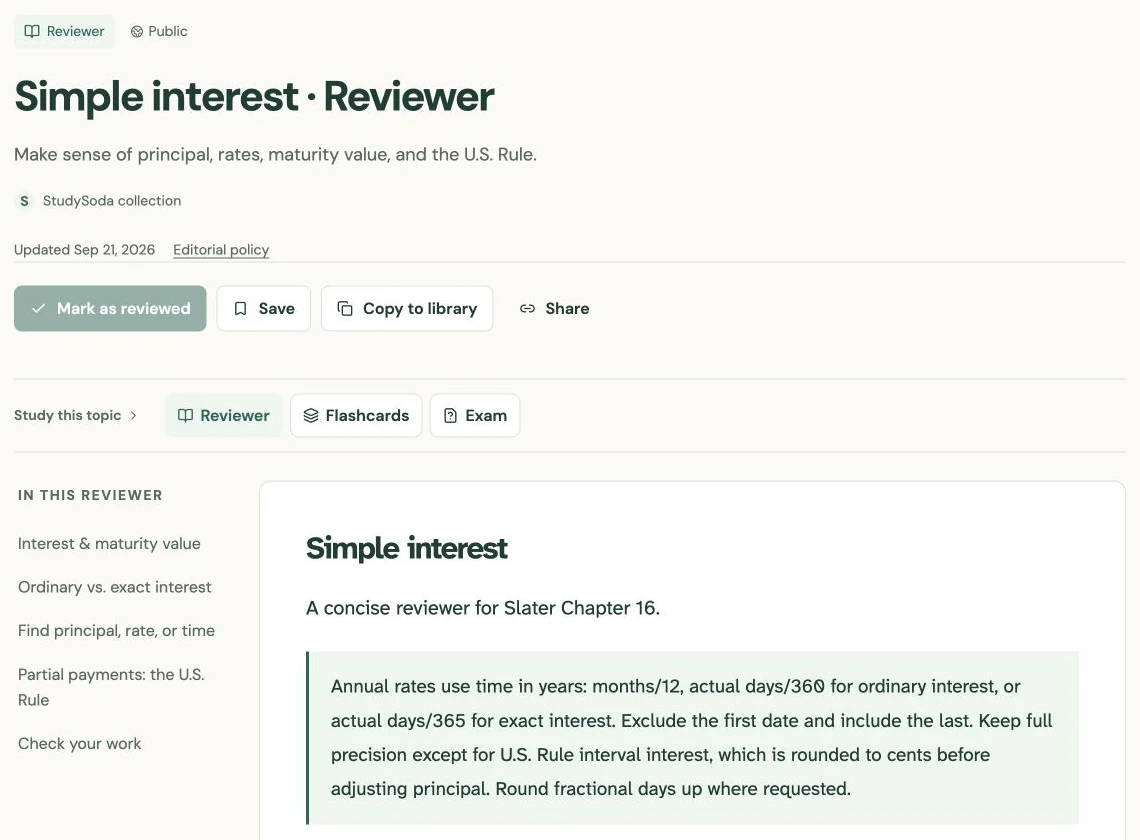
Pick one or two recurring causes of mistakes rather than immediately repeating the whole exam. Open the topic’s reviewer to rebuild a method. Use its flashcards for definitions or decisions you need to recall. Work a similar calculation on paper without looking at the earlier solution.
When you retry, explain the method before choosing an option. Remembering the answer letter from the previous attempt can make a score rise without showing that the underlying confusion is resolved. Compare your reasoning as well as the new result.
An active attempt uses a saved question snapshot, so later edits to the source exam do not change it mid-session. Keep any personal study notes you need outside the result page too: deleting the source material deletes its associated attempts. Treat results as feedback for the next session, not as your only permanent record of learning.
Put it into practice.
Browse practice examsFurther help
- Practice exams
Start a public practice exam to use saved answers, flags, and results.
- A convention worth checking
Worked comparison of simple interest with 360- and 365-day bases.