Study guides
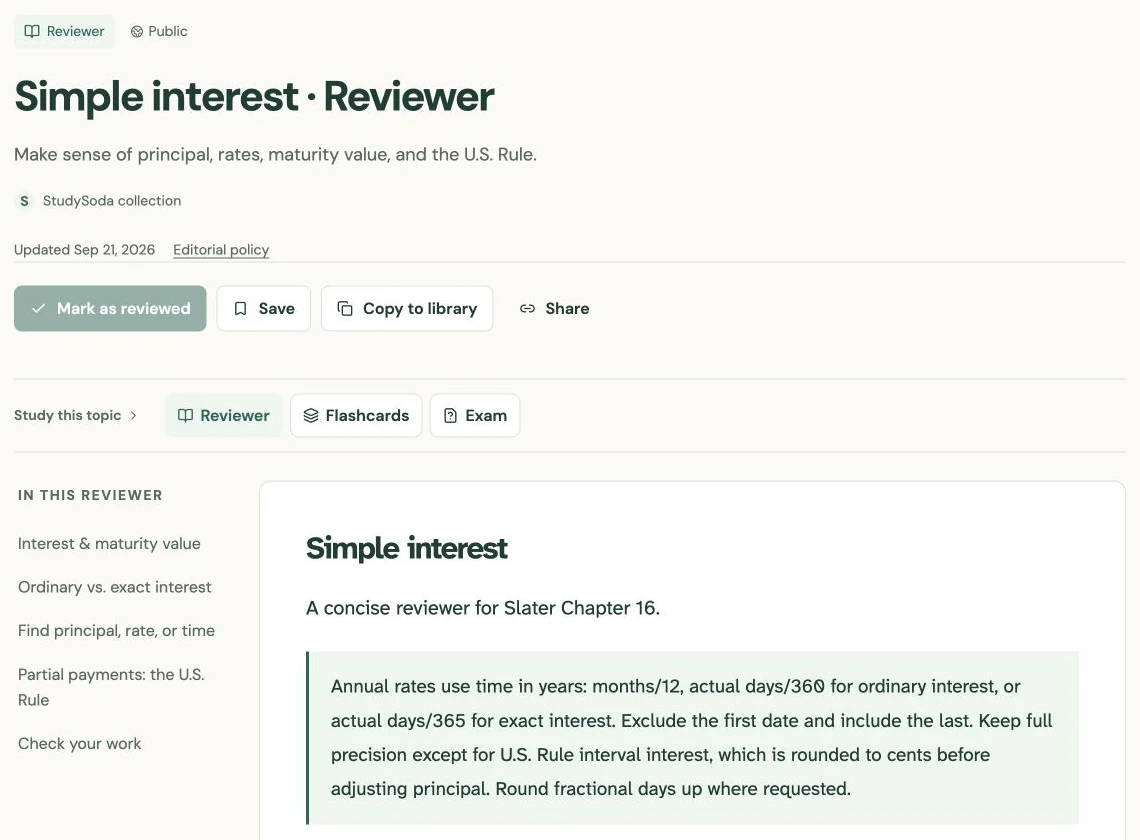
Simple interest: when to use 360 or 365 days
Count the days, choose the year basis, and find interest and maturity value with a side-by-side example.
A place to start
Choose the right model, follow a worked example, and practice simple interest, bank discount, or compound interest.
Find out when the money moves, what the percentage applies to, and whether interest earns more interest. Similar-looking rates can describe different calculations.
| The question describes… | Start with | Check first |
|---|---|---|
| Interest calculated on the original principal | Simple interest I = P × r × t | Annual rate, time in years, and the stated 360- or 365-day basis. |
| A discount withheld before the borrower receives money | Bank discount Proceeds = maturity value − discount | The discount applies to maturity value. Compare the charge with money actually received. |
| Growth over repeated compounding periods, or a deposit needed today | Compound interest & present value FV = PV(1 + i)ⁿ | A rate per period and a matching number of periods; distinguish nominal and effective rates. |
Count the days, choose the year basis, and find interest and maturity value with a side-by-side example.
See why the amount received differs from the amount repaid, and why a discount rate is not the rate on cash received.
Match the rate to the compounding period, grow a deposit, and reverse the calculation to find a present value.
Before the calculator
These guides teach classroom models with stated assumptions. Use the convention in your course problem.
Each topic brings its available public reviewers, cards, and exams together.
Need a study routine? Compare reviewers, flashcards, and practice exams, then choose the format that fits the lesson.